
When Faith Meets Reality: My Journey as a Christian Woman Who Divorced in the Church
There are some journeys we don’t plan for.
And there are some journeys we don’t speak about enough.
Divorce, for many Christian women, sits quietly in the shadows—wrapped in stigma, shame, and silence.
Yet behind closed doors, many of us have walked this road, carrying questions, pain, and faith all at once.
This is mine.
The Woman in the Pew.
I was the woman sitting in church.
The one who prayed for a resurrection in her marriage
The one who believed in marriage, commitment, and “for better or worse.”
Because when you are a Christian woman, you are not just married—you are covenanted. You are taught to endure, to forgive, to hold on.
So when things begin to break, you don’t walk away easily.
You pray harder, oh so hard.
You try more, oh so much trying to please.
You silence parts of yourself in the hope that God will fix what is hurting.
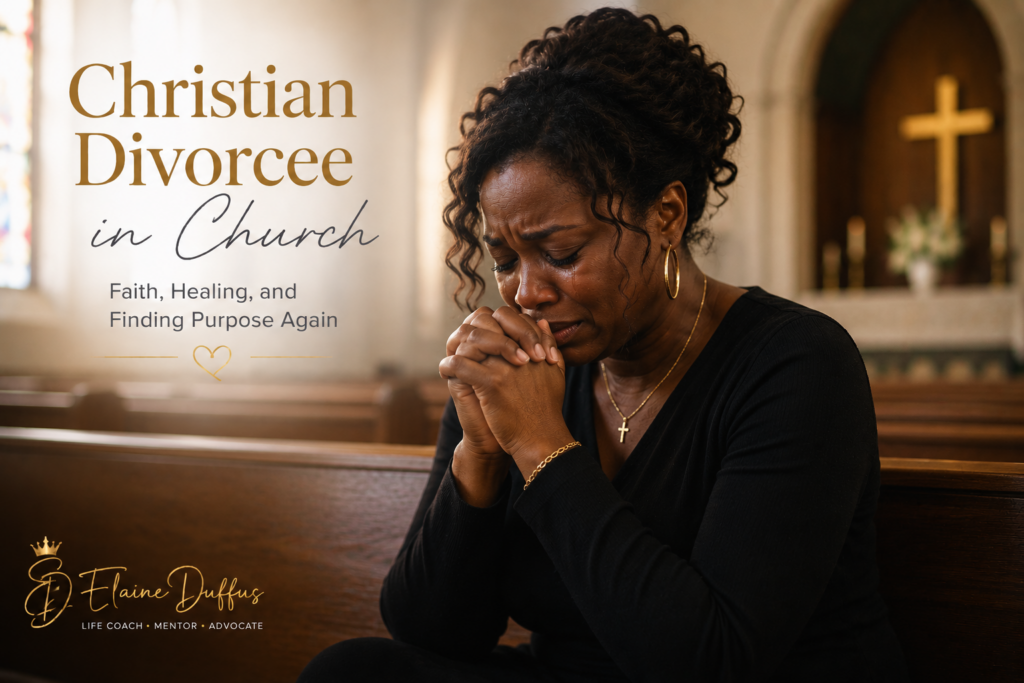
The Stigma No One Talks About
What many don’t understand is that divorce in the church is not just personal—it becomes visible.
There is a stigma that follows you.
A quiet label that is never spoken aloud, but always felt.
You are no longer just a woman of faith.
You become:
“The one who couldn’t make it work”
“The one who left”
“The one whose marriage failed”
And rarely—if ever—
“The one who survived.”
There is an expectation that you should have stayed longer, prayed harder, endured more.
That somehow, your faith should have been enough to carry what was breaking you.
But what people do not see is the private reality behind the public assumption.
When Scripture Is Used to Keep You Silent.
This is one of the hardest truths to speak.
There are times when scripture is not used to heal—but to hold you in place.
Verses about submission.
Forgiveness.
Endurance.
“God hates divorce.”
They are quoted, repeated, and sometimes placed on your shoulders as a burden—
even when what you are experiencing is not simply difficulty, but harm, not just physical harm but a deep spiritual harm.
And in those moments, faith can begin to feel like a cage rather than a covering.
But here is what I came to understand:
God’s Word was never intended to justify abuse.
A loving God does not call His daughters or sons to remain in environments where they are being broken emotionally, mentally, or physically.
Scripture should bring truth, protection, and freedom—
not silence, fear, or control.
The Weight of Shame
Shame is heavy.
And in faith spaces, it can be even heavier.
Because it doesn’t always come loudly.
Sometimes it comes quietly —
• In.the absence of support,
• In the silence after you speak,
• In the conversations that happen around you, not with you.
You begin to question yourself:
• Did I fail God?
• Did I not try hard enough?
• Am I now seen as less than?
And the truth is, the shame is often not yours to carry.
When Staying Becomes Breaking
But what happens when staying begins to cost you your peace?
Your identity?
Your emotional and spiritual wellbeing?
There came a moment when I realised:
I was not being refined—I was being worn down.
And God does not call His daughters to live in quiet suffering while their spirit breaks,. into a thousand pieces.
God was not absent in my marriage.
And He was not absent in my decision to leave.
He was there in the quiet moments when I asked,
“Lord, is this how I am meant to live?”
Sometimes God doesn’t close a door.
He gives you the courage to walk out of it.
Releasing Shame,
Reclaiming Self
Healing after divorce is not just about moving on—it is about unlearning the shame that was never yours.
It is about reclaiming:
• Your voice
• Your identity
• Uour peace
And most importantly:
That you are still loved, still chosen, and still whole in God.
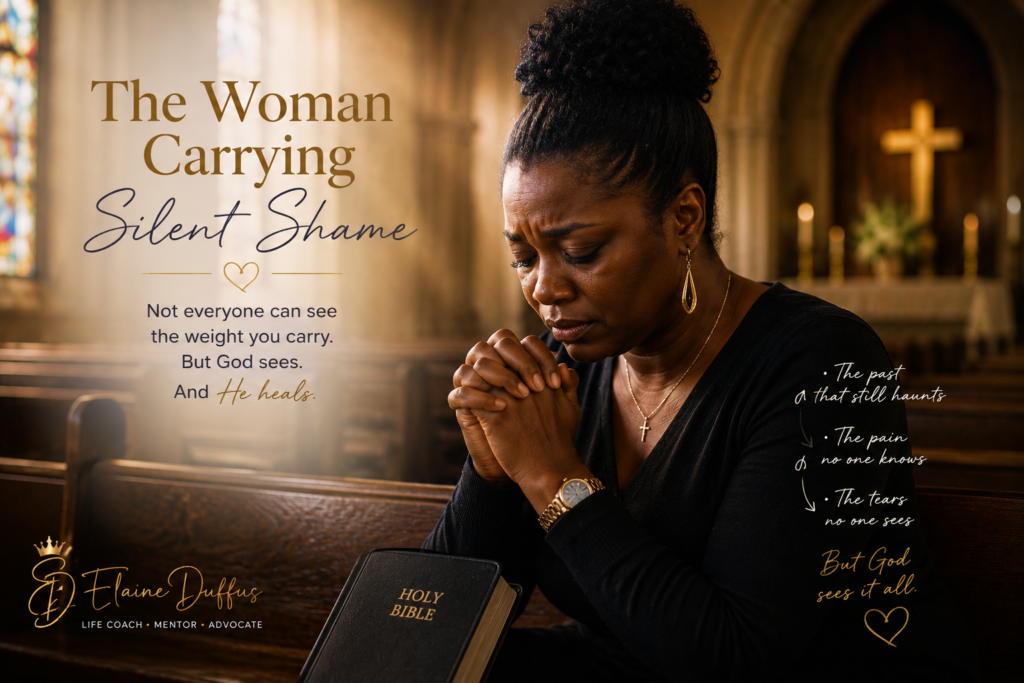
To the Woman Carrying Silent Shame
• You are not alone.
• You are not weak.
• You are not a failure.
And you are not less of a Christian woman because your story did not follow the script.
God does not measure your life by public opinion.
He measures your heart.
Divorce was never my plan.
But neither was losing myself.
And sometimes, your courage to leave— especially when others tell you to stay— is not a lack of faith…
it is the beginning of your freedom.
What Speaking to a Life Coach Can Do
Sometimes, what you need is not more advice—
but a safe space to finally be heard.
Speaking to a Life Coach can help you:
• Process your experience without judgment
• Separate truth from guilt, faith from fear
• Rebuild your confidence and identity
• Set healthy boundaries without shame
• Move forward with clarity, peace, and purpose
What You Can Gain From Working With a Life Coach
A Life Coach provides a safe, non-judgmental space where a woman can speak openly and be truly heard.
Where you helps untangle overwhelming thoughts and bring clarity to emotional confusion.
A Life Coach supports you in separating truth from guilt, and faith from fear.
Helps rebuild your confidence and reconnect you with your true identity.
Through coaching, you learn to release shame that was never yours to carry.
You are guided to set healthy boundaries without feeling selfish or disloyal.
A Life Coach helps you move from survival mode into purposeful living.
She supports you in making decisions with confidence, not doubt.
Begin to rediscover your voice, your strength, and your direction.
With the right support, you don’t just heal—you grow into a stronger, more empowered version of yourself.
Your Next Chapter Starts Here
You don’t have to carry this alone.
You don’t have to have all the answers today.
But you do deserve support.
And sometimes, one conversation can be the beginning of everything changing.